previous: examples-ordinarius
up: muffat-regulae
next: examples-semisextilis
|
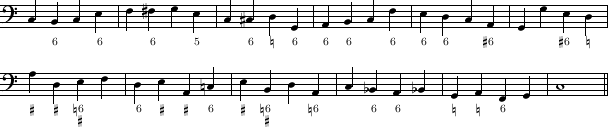
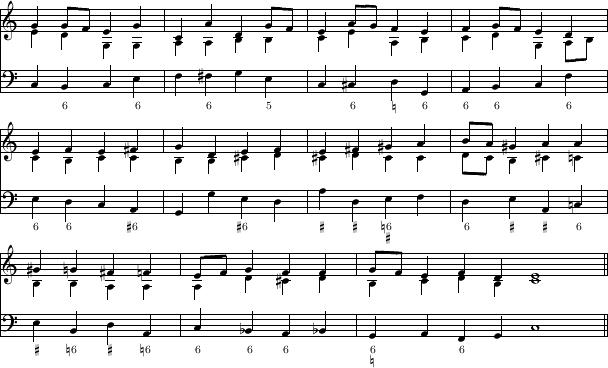
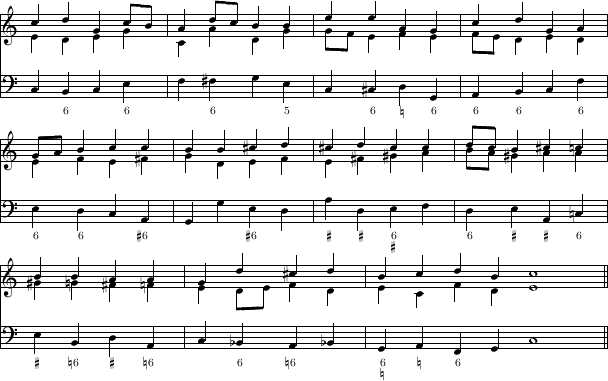
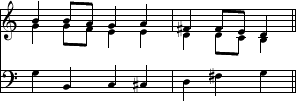
Sextilis oder Grieff der Sext, 3. 6. 8.
|
Sextilis or grip of the sixt, 3. 6. 8.
|
Sextilis ou accord de sixte, 3. 6. 8.
|
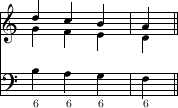
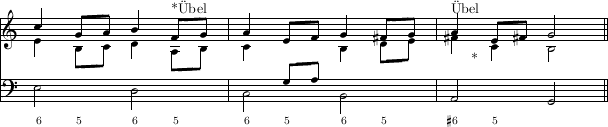
I. Exemplum
|
Erste Manier
|
First manner
|
Première manière
|
|
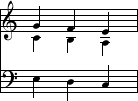
Auf ein andere versetzte Weis so auch cantabl.
|
In another shifted way which is also melodic.
|
Autre façon decalée et également mélodique.
|
|
|
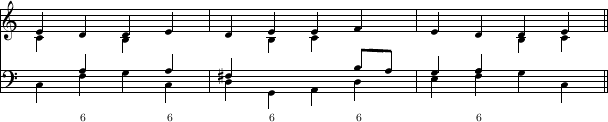
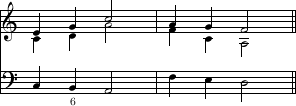
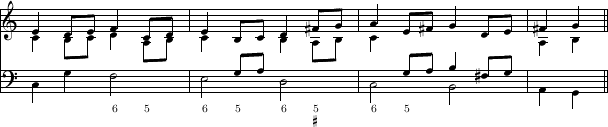
II. Exemplum
|
Wann der Baß per Semitonum aufsteigt
|
When the bass ascends a half note
|
Quand la basse monte d'un demi-ton
|
|
|
Gute, doch gemeine Manier.
|
Good but ordinary manner
|
Manière bonne mais ordinaire
|
|
|
|
|
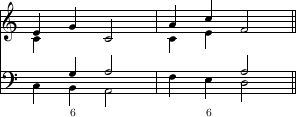
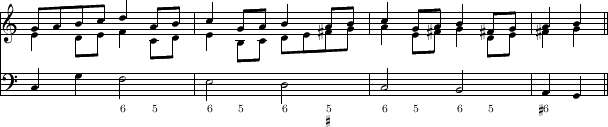
Noch schöner
|
Even better
|
Encore mieux
|
|
|
[p. 82] Auch schön
|
Also nice
|
Aussi beau
|
|
|
|
|
Etwas hart
|
Somewhat hard
|
Un peu dur
|
|
|
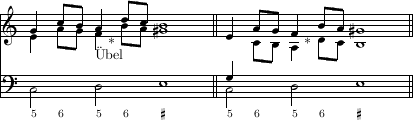
III. Exemplum
|
Wann der Baß per Tonum hinauf steigt.
|
When the basse ascends a note.
|
Quand la basse monte d'un ton.
|
|
|
|
|
Ohne Sext durch
|
Without sixth through
|
Sans sixte
|
|
|
Zu gemeine Manieren.
|
Too ordinary manners.
|
Manières trop ordinaires.
|
|
|
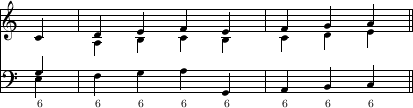
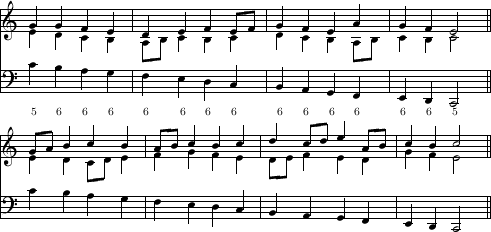
IV. Exemplum
|
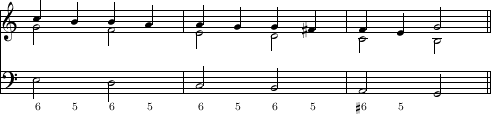
Lauter Sextil aufwerts gradatim
|
Nothing but sixths gradually upward
|
Uniquement des sixtes montant par mouvement conjoint
|
|
|
|
|
|
|
Übel, weillen die 3 Oberstimmen lauter Quinten gegeneinander machen.
|
Bad, because the three upper voices form nothing buth fiths between them.
|
Mauvais, parce que les troix voix supérieures ne font entendre que des
quintes. |
|
|
[p. 84] Wann aber zwischen den obern Stimmen ein 5t just, die andere aber
falsch ist, ist es erlaubt.
|
But when there is one right fifth between the upper voices and another false,
then it is allowed.
|
Mais quand une quinte juste est jouée avec une autre, fausse, entre les voix
supérieures, c'est permis. |
|
|
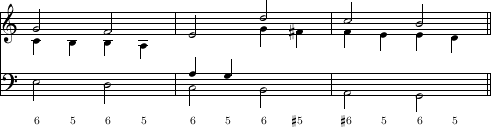
Schöne Abwexlung der Quinten und Sexten.
|
Nice variation of the fifth and the sixth.
|
Belle variation entre les quintes et les sixtes.
|
|
|
|
|
[p. 85] Allzu gemein
|
Too ordinary
|
Trop ordinaire
|
|
|
|
Gefahr, wann es also stehet wegen eines falschen Quartsprung
|
Danger, if it is written like this, because of a false jump by a fifth
|
Dans le cas d'un faux saut sur une quarte, il y danger.
|
|
|
Remediert
|
Corrected
|
Corrigé
|
|
|
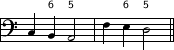
V. Exemplum
|
Wann der Baß abwerts gradatim absteiget vom Sextil zum Ordinario, so meide nach
der Sext minor die Octav, absonderlich, wann der folgende Ordinarius in einer
guten Noten stehet.
|
When the bass descends gradually from the sextil to the ordinario then
avoid the octave after the minor sixth, especially when the following
ordinario is upon a good note.
|
Quand la basse descend conjointement du sextil vers l'ordinario, évite
l'octave après la sixte mineure, en particulier quand l'ordinario
suivant est sur une bonne note.
|
[p. 86]
|
|
|
|
|
|
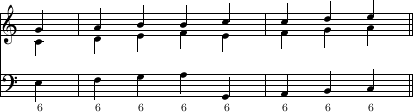
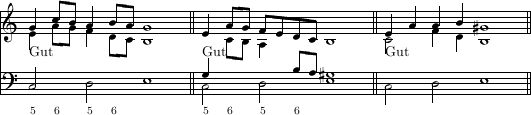
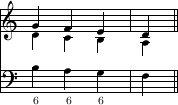
VI. Exemplum
|
Lauter Sextil abwerts gradatim.
|
Nothing but sixth gradually downwards
|
Uniquement des sixtes allant conjointement vers le bas
|
|
|
|
|
Ist auch zu observiren, was von denen zweÿen obern Stimmen wegen der Quint
gegen einander aufwerts gesagt worden.
|
One should also observe what has been said about the to upper voices and the
upwards going fifths.
|
On doit aussi observer ce qui a été dit au sujet des quintes montant
dans les voix supérieures.
| |
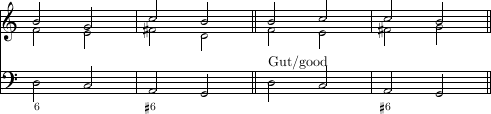
Gut
|
Good
|
Bon
|
|
|
|
|
|
|
Abwexlung der Quinten und Sexten
|
Variation of the fifths and sixths
|
Variation de quintes et de sixtes
|
|
|
|
|
[p. 88] Anders auch schön
|
Differently, nice as well
|
Différement et également beau
|
|
|
|
|
|
|
Remedirte
|
Corrected
|
Corrigé
|
|
|
[p. 89] Allzu gemeine Manieren
|
Much too ordinary manners
|
Manières beaucoup trop ordinaires
|
|
|
Zu gemein
|
To ordinary
|
Trop ordinaire
|
|
|
Nach der Sext major ist es schädlich, terzweis abwerts zu springen, wann der
Baß thonweis absteiget.
|
It is harmful to jump downwards by a third after the major sixth when the bass
descends note by note.
|
Après une sixte majeure, sauter vers le bas par une tierce est nuisible
quand la basse descend note par note.
|
|
|
|
|
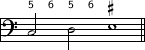
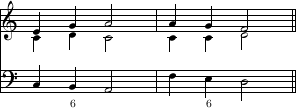
VII. Exemplum
|
Von Sextil zum Ordinario, wann der Baß terzweis aufwerts springt.
|
From sextil to the ordinario, when the bass jumps a third
upwards.
|
Depuis le sextil vers l'ordinario, quand la basse saute par
une tierce vers le haut.
| |
Die beste Manier ist die folgende; Schön
|
The best manner is the following; Nice
|
La meilleure manière est la suivante; beau
|
|
|
[p. 90] Schlecht
|
Bad
|
Mauvais
|
|
|
Die übrige Sprüng vom Sextil zum Ordinario seÿnd leicht zu accompagnieren, wann
man nur der Nähe nachgehet und in der obersten Stimm nach der Sext die Octave
meidet.
|
The other jumps from sextil to the ordinario are easy to
accompany if one follows the next way and avoids the octave after the sixth in
the upper voice.
|
Les autres sauts depuis le sextil vers le ordinario sont
faciles à accompagner si on reste à proximité et si l'on évite l'octave après
la sixte dans la voix supérieure.
|
last modified Wed Mar 14 15:02:22 2007 by Bernhard Lang previous: examples-ordinarius
up: muffat-regulae
next: examples-semisextilis
|